Money Train 4 combines an industrial western setting with an unusually dense feature vocabulary. The challenge for an independent review is not finding more adjectives for the train. It is distinguishing the board, the counter and the feature objects so a reader can understand what changes when an event resolves.
- Developer
- Relax Gaming
- Listed mechanic
- Scatter Pays
- Named elements
- Arms Dealer, Upgrader, Unlocker
- Review lens
- State, persistence and counters
Specification basis: Relax Gaming product documentation.
Three kinds of state on one screen
Relax Gaming describes an Arms Dealer, a Respin feature, an Upgrader associated with persistence, an Unlocker that reveals more rows and a Reset feature that refills the spin counter. These terms indicate several kinds of state: objects on the board, the board's size and the remaining counter.
Separating these categories is more useful than treating all of them as ‘extra features’. A change to the number of visible positions is structurally different from a change to an object that already occupies a position. A counter reset is different again.
Persistence changes how an object is read
When an effect persists, its contribution cannot be understood solely as a one-frame event. The interface needs to distinguish a newly introduced object from one whose role continues. A stable marker can make that distinction easier to follow.
In documentation, the corresponding question is ‘what survives this transition?’ Answering it establishes the starting state for the next event. It does not establish which event will occur next. Persistence is a property of the current system, not knowledge of a future outcome.
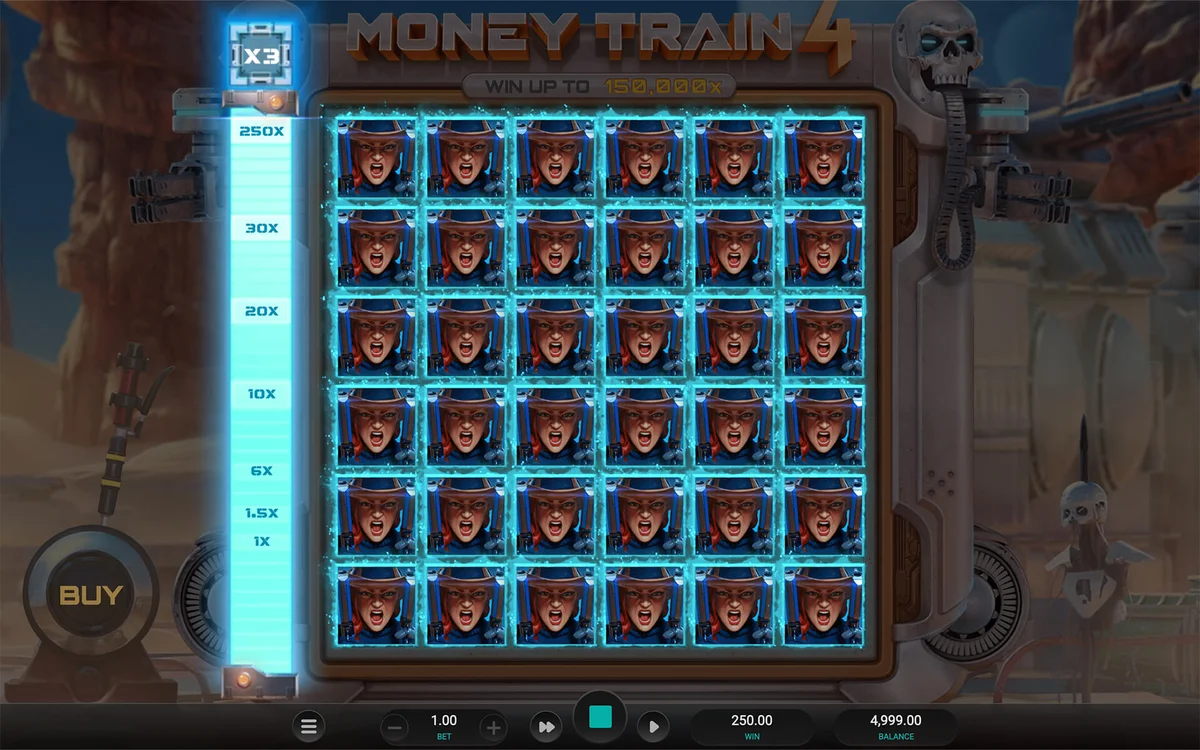
A changing board needs spatial continuity
Revealing additional rows changes the area the reader must scan. The old and new regions should remain easy to distinguish, particularly during motion. Otherwise it can be difficult to tell whether an existing object moved or a new position appeared.
This is a general information-design problem familiar from expanding tables and dashboards. An animated expansion can preserve continuity if its origin is clear. A still image can communicate the final size, but it cannot demonstrate whether the transition itself was easy to follow.
Three useful distinctions
| Term | What it describes |
|---|---|
| Board expansion | A change to available spatial positions. |
| Persistent effect | State carried into later relevant events. |
| Counter reset | An update to the remaining feature counter. |
Counters are units of state, not narrative promises
A counter that refills or resets is part of the feature's rule system. Its visual prominence may encourage a reader to follow it as a story, but the meaningful technical question is what changes the counter and when that change is applied.
A clear explanation places the counter alongside the event responsible for updating it. Describing only the final number loses the relationship. Our review does not infer a typical duration from the product artwork or from the existence of a reset mechanism.
Why the setting works as a framework
The locomotive, metalwork and dusty palette provide a coherent setting for a mechanically busy interface. Industrial imagery naturally suggests systems, moving parts and linked operations. That makes it a useful visual frame for a game with many named effects.
Coherence is not the same as simplicity. The more different objects the screen contains, the more important a readable hierarchy becomes. Our assessment is that Money Train 4 benefits from an event map and a terminology table; a list of dramatic feature names alone leaves too much for the reader to decode.
Questions about Money Train 4
Does Scatter Pays mean a cluster system?
No. A developer's mechanic label should not be silently substituted with a different evaluation system.
Can one screenshot explain every feature?
No. It captures one state, while persistence and transitions require a sequence or written explanation.
Is this a review of every Money Train release?
No. It is specific to Money Train 4 and the features listed for that edition.
Source notes
The feature descriptions refer to Relax Gaming’s documentation for Money Train 4. The interface analysis is our editorial interpretation. Source material checked on 24 September 2026.
Game imagery: Relax Gaming. Read about sources, illustrations and review scope.