Wanted Dead or a Wild is easy to identify visually: a stark western setting, distinctive characters and a conspicuous duel motif. Its mechanics are less well served by a single generic feature description. The named modes do different things, so an accurate review needs to preserve their identities rather than let the atmosphere do all the explaining.
- Reel field
- 5 × 5
- Evaluation
- 15 paylines
- Distinctive feature
- DuelReels
- Visual setting
- Stylised western
Specification basis: Hacksaw Gaming product documentation.
A western title with several feature identities
Hacksaw describes a five-reel, five-row game and DuelReels that expand into wild reels under the qualifying condition. Its feature names include The Great Train Robbery, Duel at Dawn and Dead Man’s Hand. These names refer to different behaviours rather than interchangeable scenery.
The first task for a reviewer is identification. A screenshot should retain the mode name and enough of the board to show the relevant transformation. A spectacular result display cropped away from those details cannot establish which mechanism produced it.
DuelReels changes the scale of a symbol
An expanding reel transforms a local object into something that occupies a larger part of the board. This gives the animation a clear visual arc: arrival, transformation and evaluation. The middle of that arc is not necessarily the final state.
An explanatory diagram can make this easier to follow by separating an ordinary symbol position from the full-height transformation. The diagram should be schematic, with its purpose stated in the surrounding text, rather than fabricated to look like a captured result from the client.
A feature name is a navigation aid
Distinctive names can make complex systems easier to discuss. Instead of describing every frame from scratch, a reader can orient themselves through a mode label and then focus on the remaining details. That benefit disappears when reviews shorten every label to ‘the bonus’.
The same problem appears in software documentation when several different screens share one vague heading. Precise naming reduces ambiguity. For this title, preserving the feature identity is more informative than repeating the western story around each image.
Three useful distinctions
| Term | What it describes |
|---|---|
| Symbol position | One location before any relevant transformation. |
| Expanded reel | A larger affected area after the feature resolves. |
| Mode label | The name that identifies the active feature context. |
Visual intensity is not a statistical measure
Large transformations, strong contrasts and dramatic character imagery can make an event feel exceptional. That perception is part of presentation design. It should not be used as a measurement of the frequency or expected size of results.
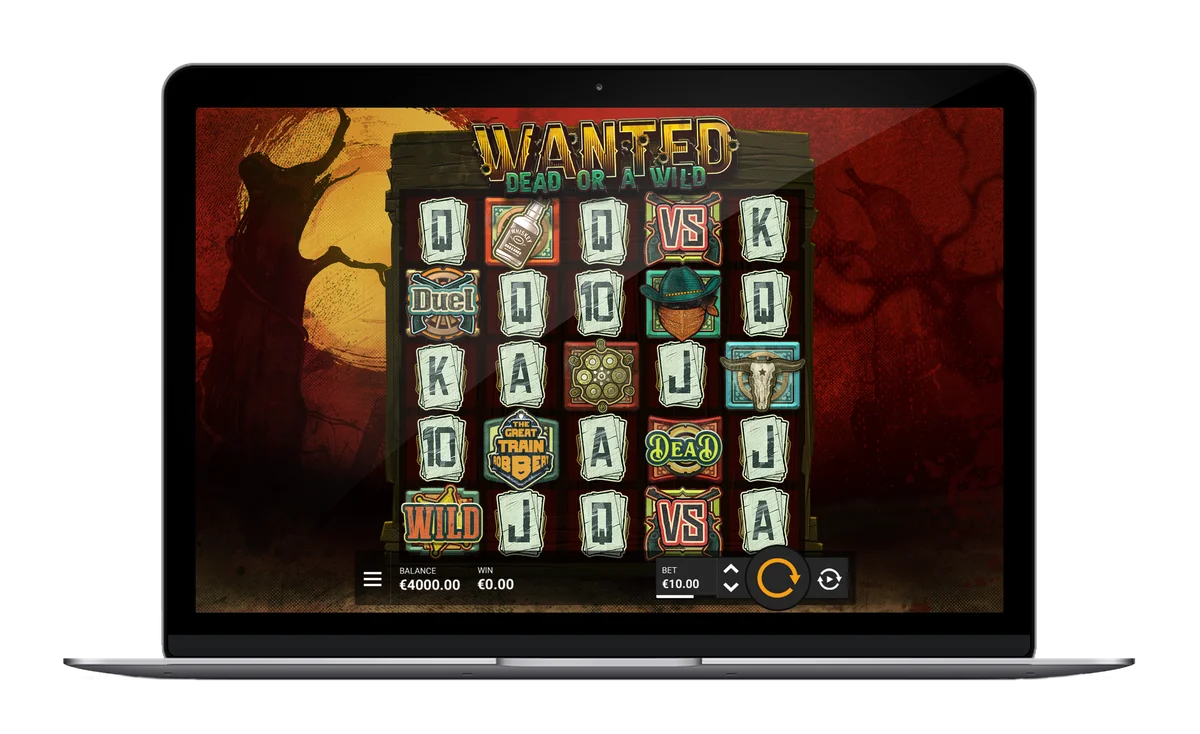
The official screenshot supports discussion of composition and interface layout. It does not supply a representative dataset of rounds. Our review therefore describes the event categories and visual language without claiming to have derived a statistical model from a handful of attractive frames.
What the western theme adds
The title's visual shorthand gives its features a memorable narrative context. Duels suggest opposition and confrontation; a train suggests movement and collection. Those associations can help a reader remember labels even before the mechanics are fully understood.
The tradeoff is that dramatic storytelling can distract from small state indicators. A careful article brings attention back to the mode, the affected positions and the order of the transformation. That is the basis of this review: a specific explanation of a recognisable game rather than a general claim about its financial appeal.
Questions about Wanted Dead or a Wild
Are the named features just different backgrounds?
No. The developer describes different feature behaviours, so their labels matter.
Can a cropped result image identify the mode?
Usually not reliably. The mode name and board state provide the missing context.
What does this review assess?
How the reel transformations and feature identities are communicated, using the published rules and imagery.
Source notes
The feature descriptions refer to Hacksaw Gaming’s documentation for Wanted Dead or a Wild. The interface analysis is our editorial interpretation. Source material checked on 24 September 2026.
Game imagery: Hacksaw Gaming. Read about sources, illustrations and review scope.